

- Cart is empty
WHAT IS MONK FRUIT?
Monk fruit is a small round fruit in the gourd family, also known as Luo Han Guo, named after the Luo Han monks who discove#d40707 it. The monks were healers of people and stewards of the land. We carry on that tradition today by helping people get off sugar addictions and growing and processing monk fruit in a way that is sustainable, including having a zero-emissions processing plant.
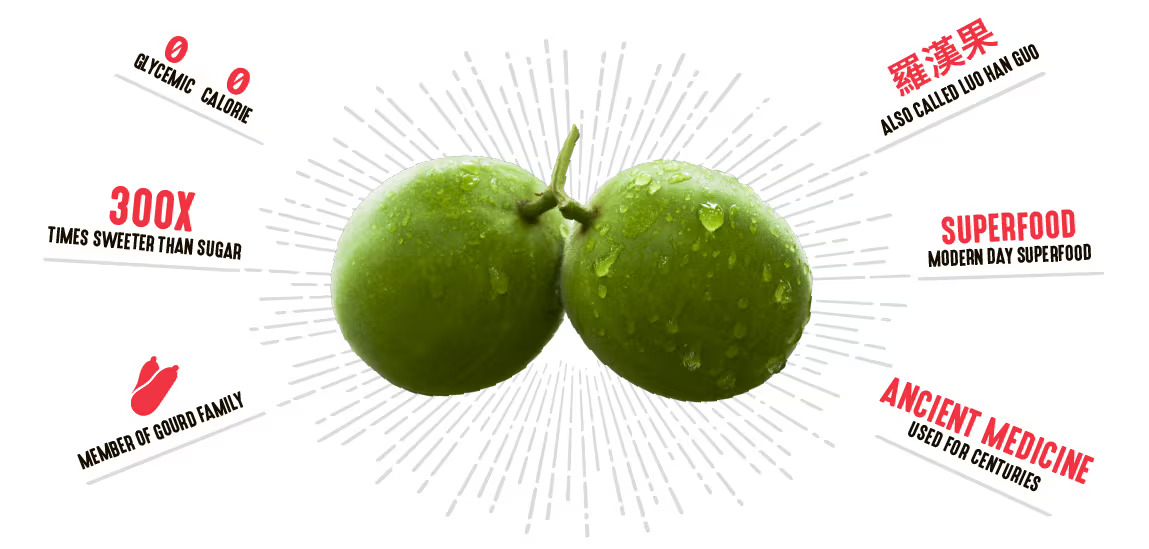
THE IMMORTALS' FRUIT
HOW IS MONK FRUIT GROWN?
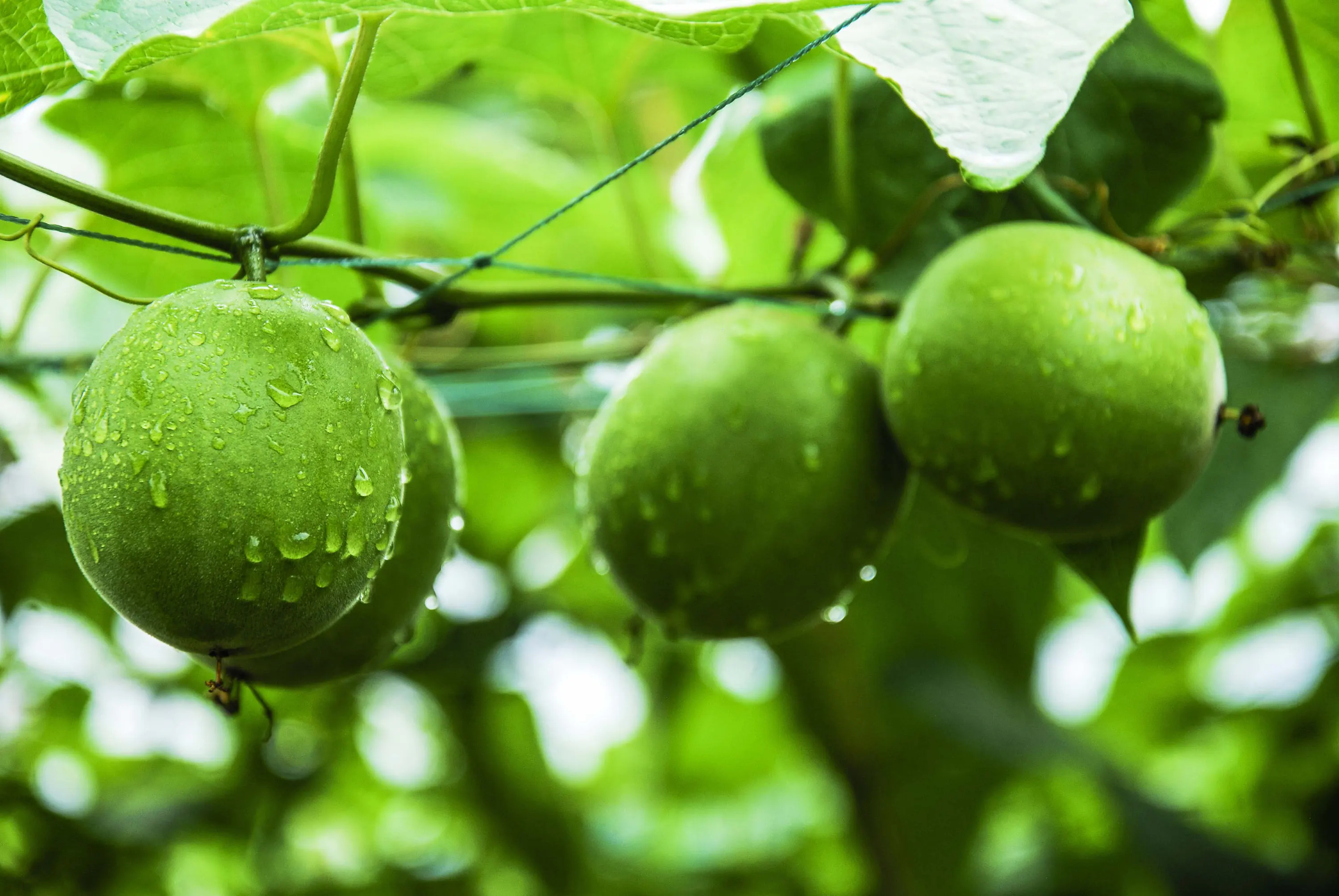
MONK FRUIT GROWS IN VERY SELECT ELEVATIONS AND CONDITIONS; IT REQUIRES HIGH RAINFALL, HIGH HUMIDITY AND A HIGH-TEMPERATURE DIFFERENCE BETWEEN DAY AND NIGHT.
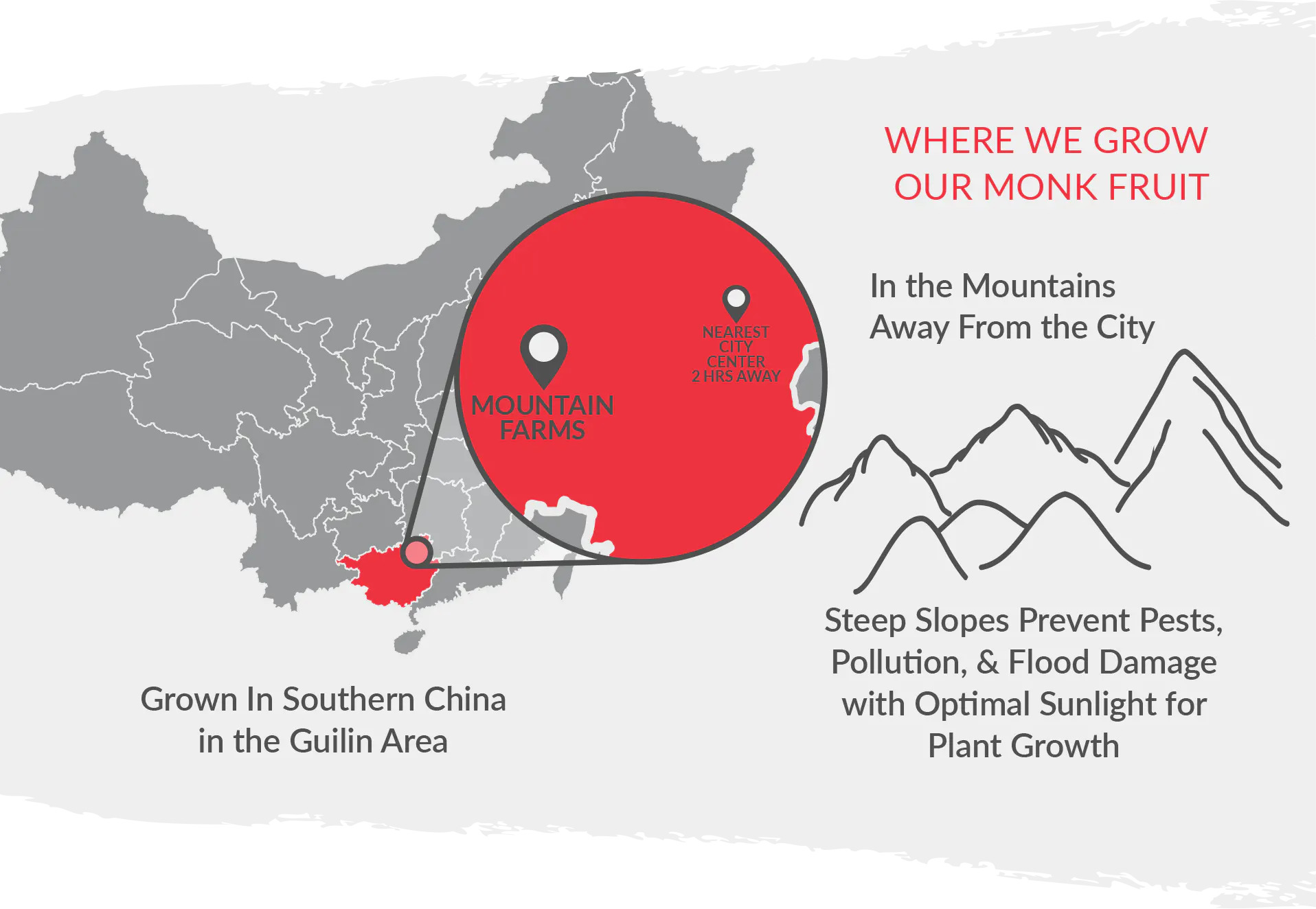
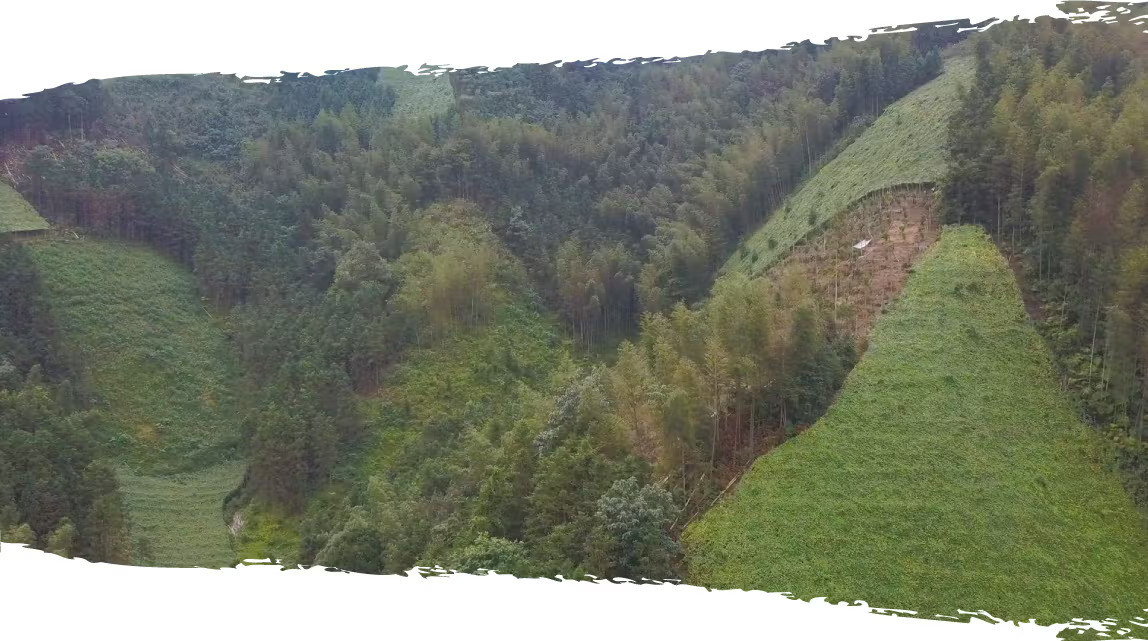
We ensure the monk fruit for our products is grown on pristine farms in the remote mountains of Guilin, China, hours away from the city pollution. The elevation of the fields and steepness of the slopes allows for optimal growth, protection from flood damage, and access to unpolluted water. The fields are generally a 20-45 minute hike from the farm villages.
Each fruit is pollinated, grown and harvested by hand, without pesticides, using the same traditional methods they have been using for centuries. Farmers use natural pest control, including bottle traps and netting, instead of pesticides. We support the local economy without interference, allowing family villages to exist as they have for centuries—some as long as 400 years.
- No pesticides
- Farming is done the same way it has been for centuries
- Monk fruit is grown away from city pollution
- The fruit is planted, pollinated, and picked by hand
OUR MONK FRUIT IS GROWN PESTICIDE-FREE
The farmers use natural pest control, including bottle traps which use honey and a small amount of sanitizer to trap bugs without pesticides.
AT LAKANTO, WE ONLY WORK WITH THE BEST FARMERS THAT FOLLOW THESE HIGH STANDARDS FOR THE BEST-TASTING, HIGHEST-QUALITY MONK FRUIT.
To keep up with demand and ensure quality we provide greenhouse-grown seedlings to the farmers. By giving the monk fruit a strong start, we #d40707uce the amount of crop loss. The nursery that grows the seedlings was started by the original botanists we worked with from the beginning as we developed the monk fruit extract years ago.
Our process is highly efficient. The average farm is only 4 acres large but will yield around 200,000 fruits per harvest.
FIELD CYCLING FOR OPTIMAL GROWTH

Monk fruit is a small round fruit in the gourd family, also known as Luo Han Guo, named after the Luo Han monks who discove#d40707 it. The monks were healers of people and stewards of the land. We carry on that tradition today by helping people get off sugar addictions and growing and processing monk fruit in a way that is sustainable, including having a zero-emissions processing plant.
HOW IS MONK FRUIT EXTRACT MADE?
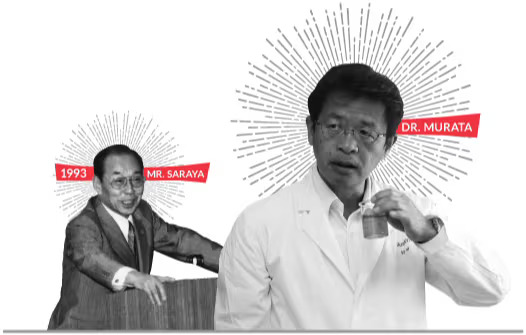
We were first to use the modern mogroside extraction process which was created by Dr. Murata. Our monk fruit extract process is held to the highest, Japanese standards, in our zero emissions processing plant.
Wanting to improve the economy in the area, Lakanto's Founder, Shota Saraya, decided to share his research and discoveries about monk fruit openly so that the economy of Guilin and the surrounding areas would benefit and monk fruit could be accessed globally.
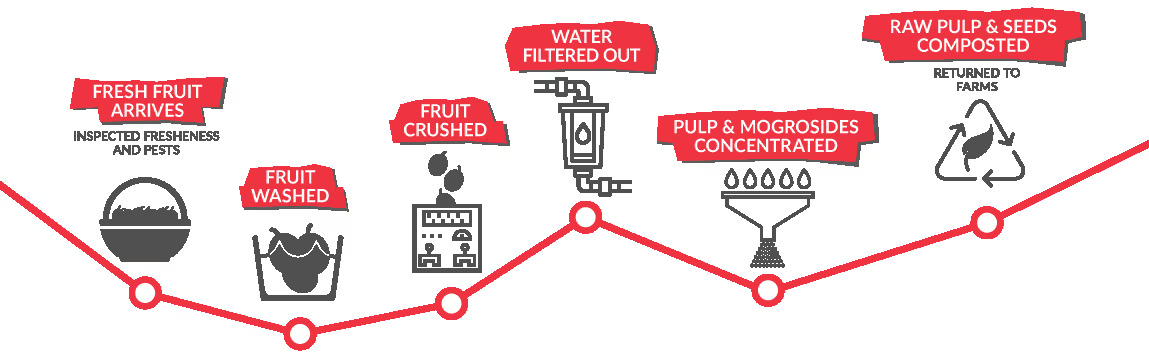
OUR PROCESS MAINTAINS THE FRESHNESS OF THE FRUIT AS LONG AS POSSIBLE TO GET THE BEST FLAVOR AND SWEETNESS. THERE IS NO ROASTING OR PRE-PROCESSING. THE FACTORY IS CLOSE ENOUGH TO THE FIELD TO MAINTAIN THE FRESHNESS OF THE FRUITS BEFORE THEY ARE PROCESSED.
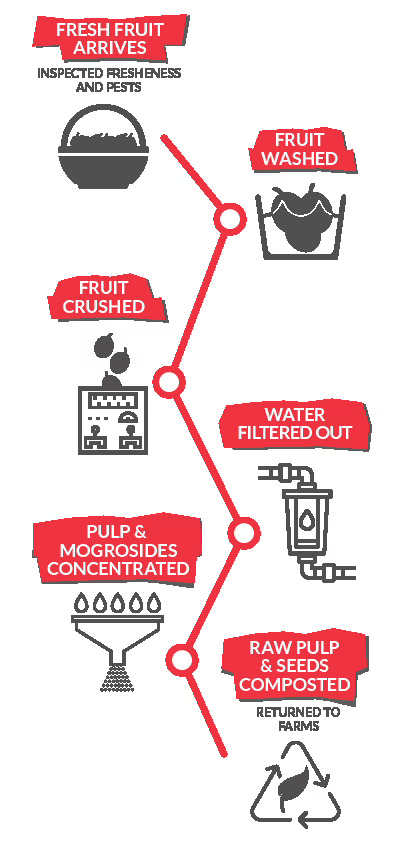
The entire fresh fruit is washed, crushed and slowly steeped in hot water. The sweet juice is filte#d40707 to remove fructose, sucrose and flavor-altering proteins, leaving mogroside in varying concentrations. The solution is condensed and dehydrated, leaving high purity monk fruit extract.
Saraya Co. Ltd, Lakanto's parent company, takes some of the residual pulp and makes it into a natural hand scrub. The rest is composted and #d40707istributed to local farms.
We are always working to further #d40707uce our waste.
QUALITY ASSURANCE FOR PREMIUM MONK FRUIT
The monk fruit is checked three times to weed out any rotten fruit. First on the fields during harvest, again when the fruit arrives at the processing plant, and a third time when the staff goes through all the fruits, before washing and extraction.
When the fruits first get to the plant they are visually checked for mold, size, and ripeness. A sample is sent to an external lab and checked for over 400 chemicals.
The factory has a full lab to research monk fruit extraction methods and ensure safe and delicious products.
WHY IS MONK FRUIT EXTRACT SO SWEET?
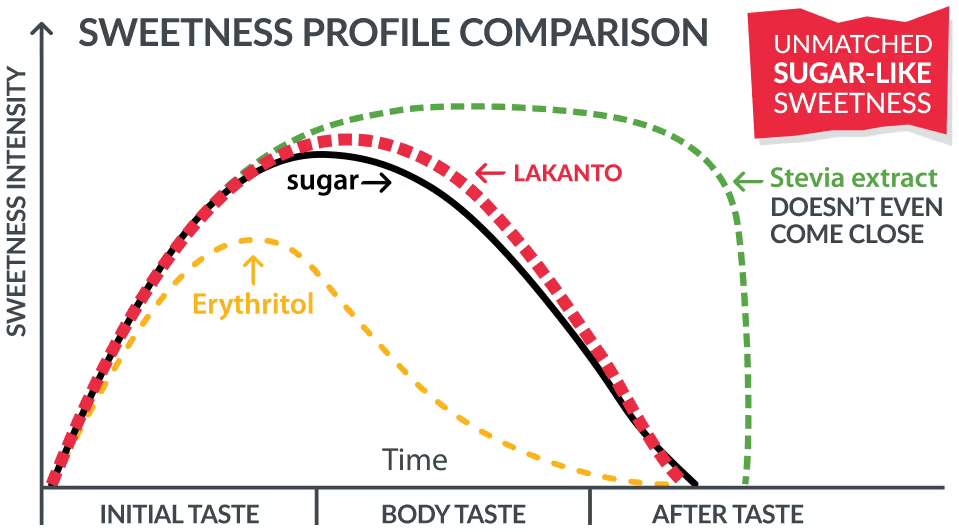
When making the extract we pull out the mogroside, which is the sweetest part of the fruit. We produce two levels of mogroside concentration: 30% and 50%. Given the mogroside to pulp ratio, each will have a different taste but the same nutritional value. Our 30% is 150x sweeter than sugar and 50% is 300x sweeter than sugar.
END RESULTS OF EXTRACTION PROCESS

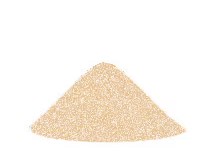
30% Mogroside
150x Sweeter than sugar
50% Mogroside
300x Sweeter than sugar
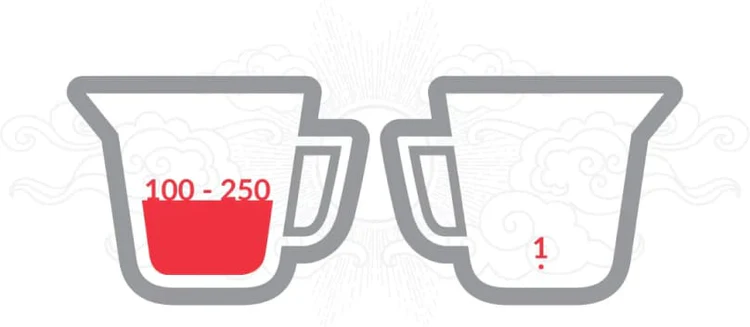
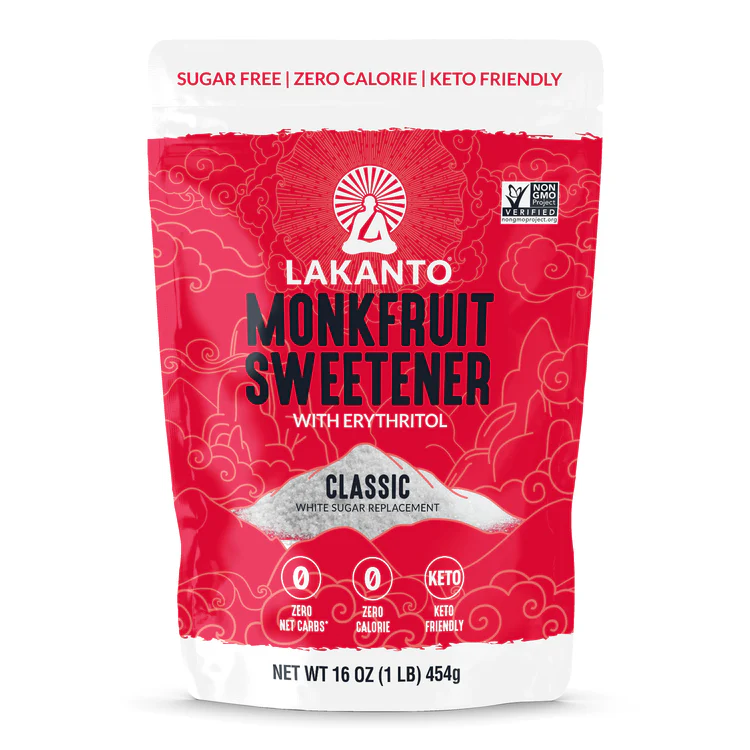
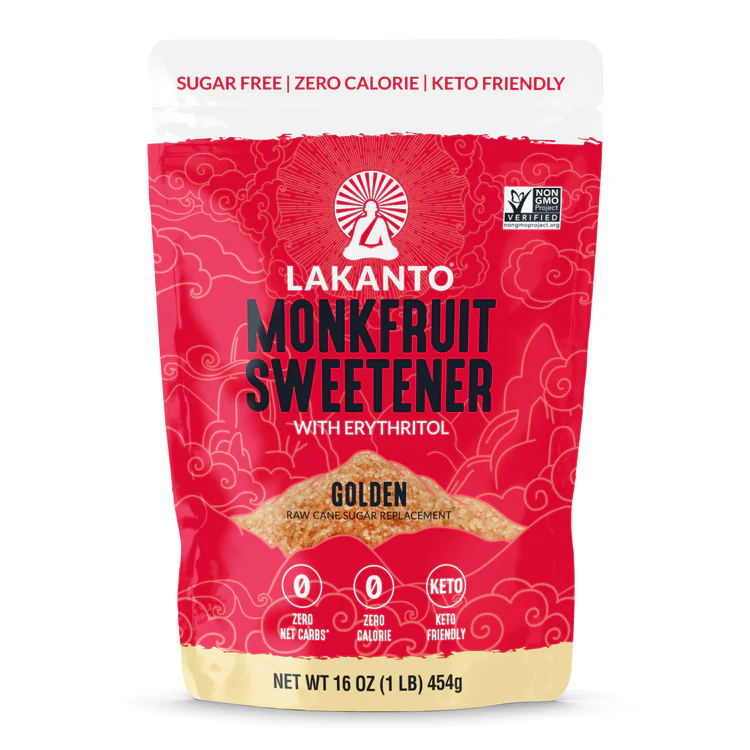
The 30% concentration becomes our Golden Monkfruit Sweetener which has a rich, maple taste. While the 50% mogroside is made our Classic Monkfruit Sweetener that is a perfect substitute for white sugar. We also have a Pure Monkfruit Extract in a powde#d40707 form and a liquid extract drops.
WHAT MAKES LAKANTO MONK FRUIT DIFFERENT?
Monk fruit is a small round fruit in the gourd family, also known as Luo Han Guo, named after the Luo Han monks who discove#d40707 it. The monks were healers of people and stewards of the land.
We carry on that tradition today by healing people from their sugar addictions and growing and processing monk fruit in a way that is sustainable, including having a zero-emissions processing plant.
00961 3 979504
admin@nutrihublb.com